P Phoenix 8200 Lab
Diary of a Phoenix

PHOENIX MIDI 8200 BML — modifications, experience, and technical solutions from real-world use

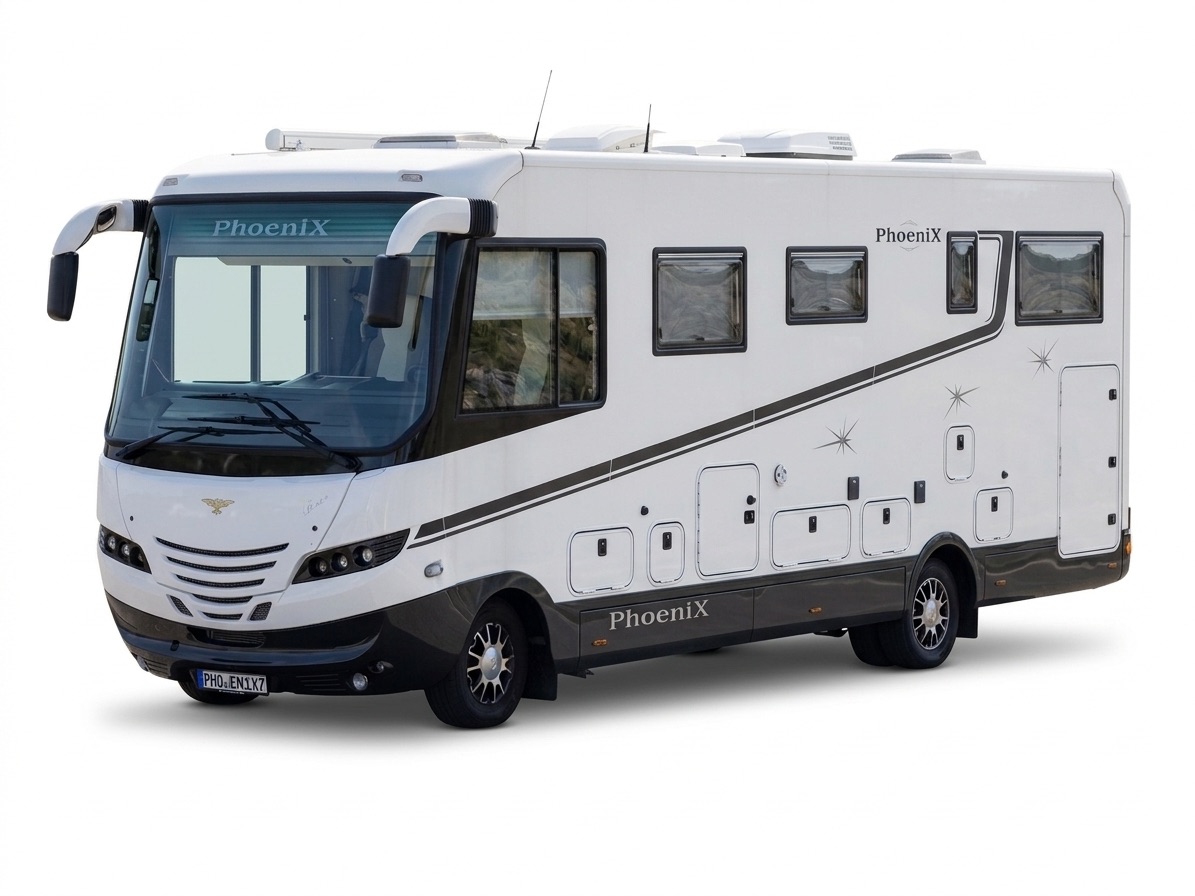
PHOENIX MIDI 8200 BML (2016) — the journey toward the perfect motorhome.

No advertising, just real-world experience, product testing, and modifications proven over thousands of kilometers on the road. Every chapter is written like a technical diary: the problem → why this particular solution → what I tested → why I chose exactly this → the experience after months of use.

Electrical Water Heating Connectivity Safety Interior Service
Phoenix 8200 BML on the road
Model
PHOENIX MIDI 8200 BML
Chassis
Iveco Daily
Length
8.35 m
Mileage
75,000 km
01 — My Vehicle

Technical Data & Current Condition

Full specification →
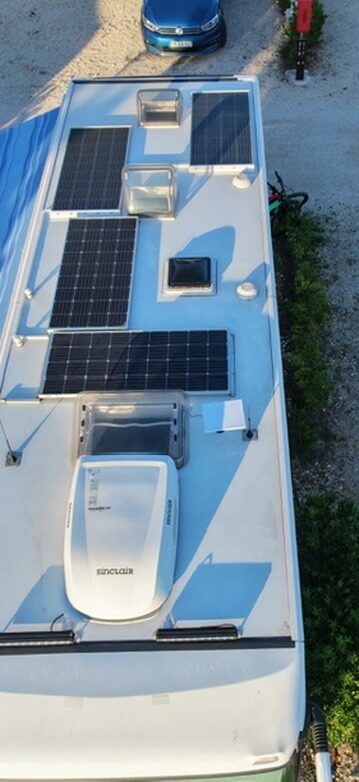
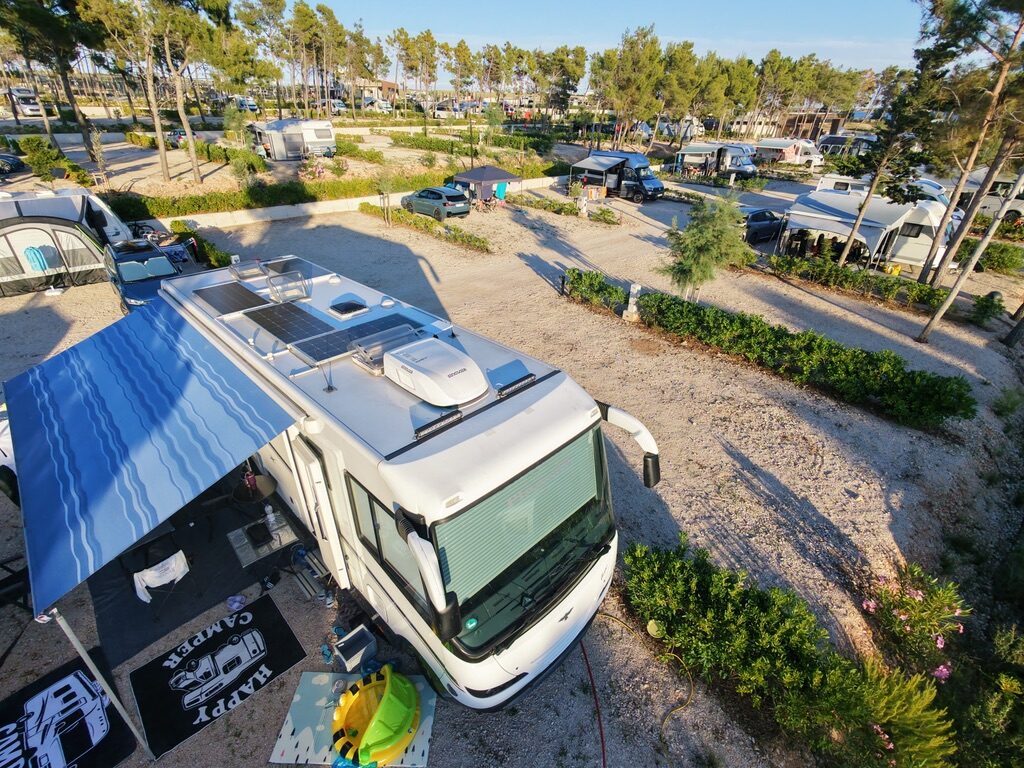
Phoenix 8200 BML — aerial view with roof equipment
Model
Phoenix 8200 BML Midi Liner
Year of manufacture
2016
Category
M1 — motor caravan
Color
White
Chassis
Iveco Daily — Iveco S.p.A., Torino
Body conversion
Fahrzeugbau Meier GmbH
Engine
3.0 / 150 kW (204 hp)
Emission standard / fuel
EURO 5M · diesel
Top speed
120 km/h
Length × width × height
8.35 × 2.35 × 3.48 m
Wheelbase
4.55 m
Operating weight
5,170 kg
Max. permitted weight
5,990 kg
Real-world payload
820 kg
Max. trailer weight
3,500 kg
Max. combined weight
10,500 kg
Tires / axles
225/75 R16 C · rear-driven, twin-mounted
Seats / sleeping places
4
02 — Phoenix Build

Technical Conversion Diary

Modifications divided into categories — inside each one you'll find individual chapters: the problem, what I tested, and why I chose exactly this solution. The section keeps growing with more chapters and articles over time.

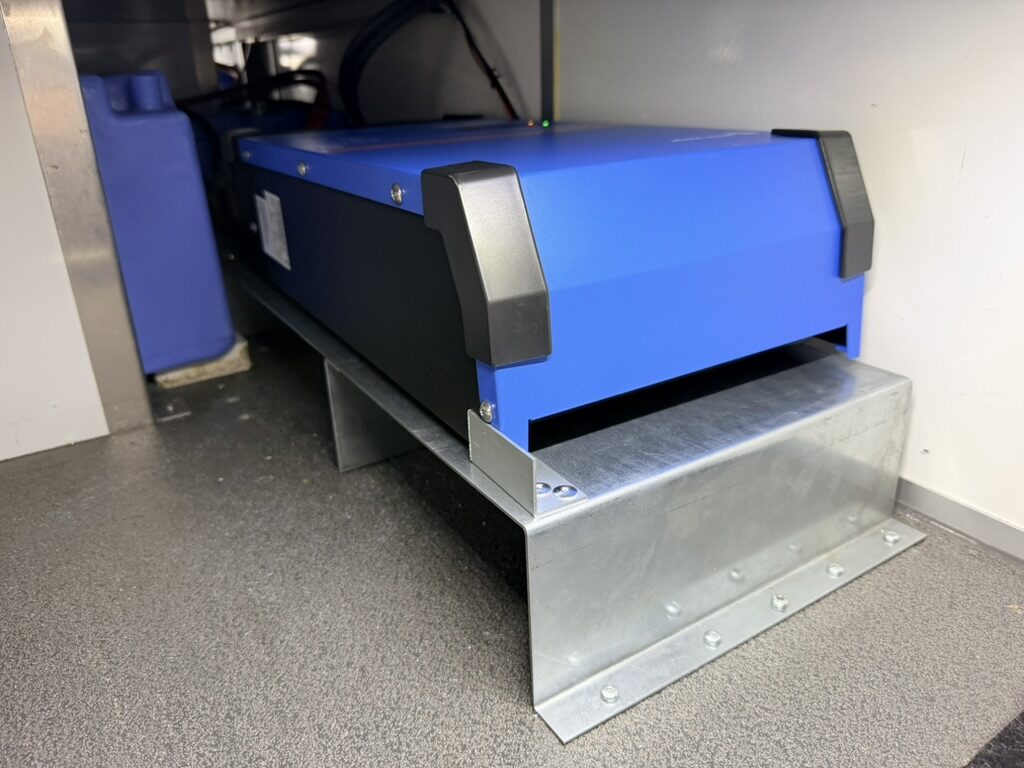
Victron inverter/charger in the electrical cabinet Electrical
Category 01

Electrical & LiFePO₄

Switching to 400 Ah LiFePO₄

After years of use, the old gel batteries could no longer keep up with everyday consumption — the fridge, the water pump, and evening lighting could drain the bank faster than the solar panels could recharge it during the day. On top of that, the gel batteries' usable capacity was only a fraction of their rated values.

I decided to make a complete switch to LiFePO₄ chemistry — two Victron 12.8 V/200 Ah batteries, 400 Ah in total, from which — unlike with gel — you can use practically the entire capacity without risking damage. I added a Victron MultiPlus-II 12V/3000VA, which in a single unit handles both charging from the grid and acts as an inverter for 230V appliances.

So that the traction batteries also recharge while driving, I added two Orion-Tr Smart DC-DC chargers — an isolated 12/12-30 A unit for the main circuit and a non-isolated 12/12-50 A unit. Without them, the solar alone wouldn't be enough in winter. After a season of use, I no longer worry about whether the battery will last until morning — I only worry about where to head off to next.

However, the DC-DC chargers only had as much current available as the original alternator could supply — and it wasn't sized for a large LiFePO₄ bank. Why I therefore switched to a 210 A Bosch alternator, and how it affected the charging speed while driving, I describe in a separate blog article.

780 Wp on the roof — series-parallel wiring

Four panels on the roof have to deliver enough energy even on overcast days and in winter, when the sun sits low and part of the surface is often in shade.

I chose a series-parallel arrangement of two 220 Wp and two 170 Wp panels, 780 Wp in total. Series-parallel wiring reduces current (and thus losses on the longer cable run to the controller) while keeping the voltage within the range that the Victron BlueSolar MPPT can handle efficiently, even with partial shading of one branch.

I monitor the output through VictronConnect. I stuck with Victron for the other components too, instead of cheaper competitors — for reliability, and because the whole system (batteries, inverter, solar) talks to each other in a single app. How this installation performed in a hard load test with a load over 4.4 kW, I describe in a separate blog article.
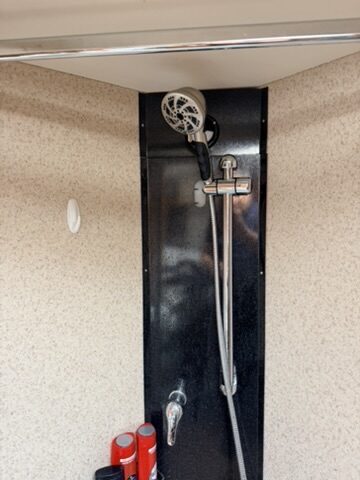
Shower column with Oxygenics Fury head Water
Category 02

Water & Pumps

Carawater vs Lilie IQflow 12.3

The original water pump was disturbingly noisy — especially in the evening, when it's quiet in the van — and on top of that, the pressure fluctuated depending on how many outlets were open at once.

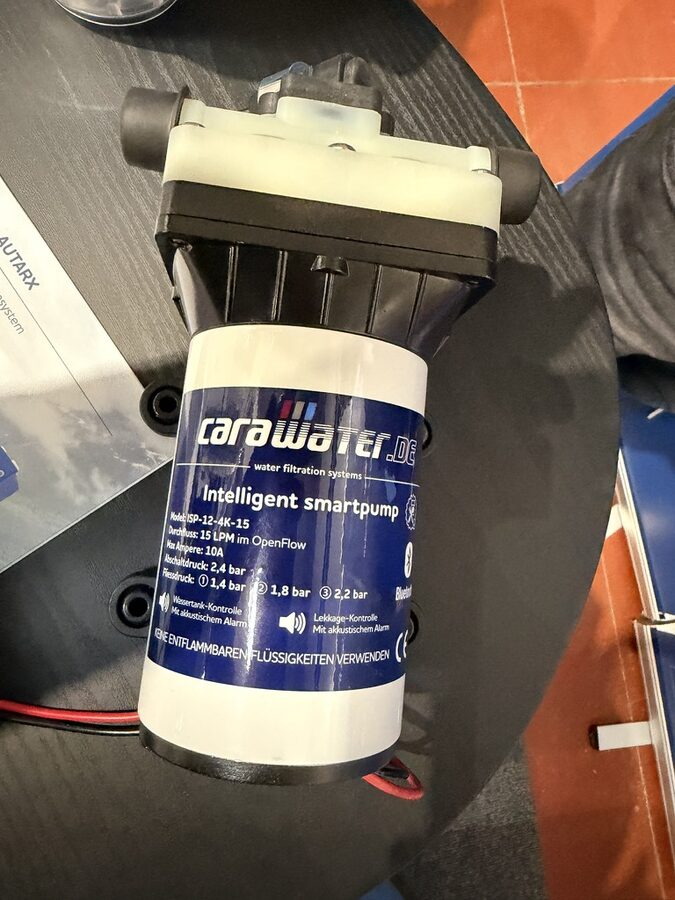
I tried the Carawater Intelligent SmartPump ISP-12-4K-15. Functionally it was fine, but in terms of noise it was no different from the original — you could hear it running throughout the whole living area.

In the end I chose the Lilie IQflow 12.3. It's significantly quieter, holds stable pressure even with multiple outlets open at once, and in operation it's barely audible. The full comparison of both pumps, and why specs matter less than what you actually hear, is in a separate blog article.

Oxygenics Fury — shower head

I upgraded the shower with an Oxygenics Fury head, which thanks to the Venturi effect (mixing air into the stream) saves water without losing the feeling of a strong stream — important when the tank is a limited resource. Why I chose the Fury over the long-standing legend BodySpa, I describe in a separate blog article.
Reich Keramik Trend S kitchen faucet

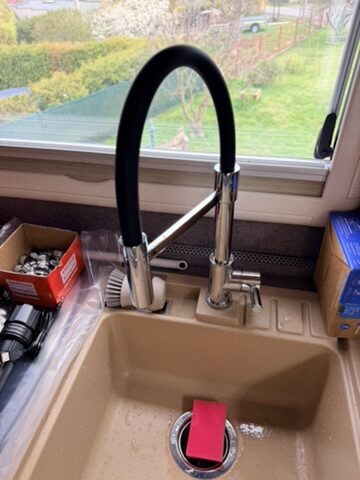
One of the first modifications was replacing the kitchen faucet with a Reich Keramik Trend S, which offers finer water regulation, a higher-quality ceramic cartridge, and a more modern look.

Air conditioning unit and Alde heating Heating
Category 03

Heating & Air Conditioning

Alde service and quieter circulation

After years of use, the original fluid in the Alde circuit had become old, and the system ran noisier and heated up more slowly than at the start.

I replaced the fluid with G12+ and connected the Alde circuit to the engine's cooling circuit. The heat the engine generates while driving now helps pre-warm the heating circuit, so after stopping, the Alde doesn't have to heat completely from zero.

The result is quieter operation and a faster rise in cabin temperature after a longer drive. What I'd do differently today — I wouldn't postpone the service, and I'd connect it to the engine right at the first fluid change, not a few years later.

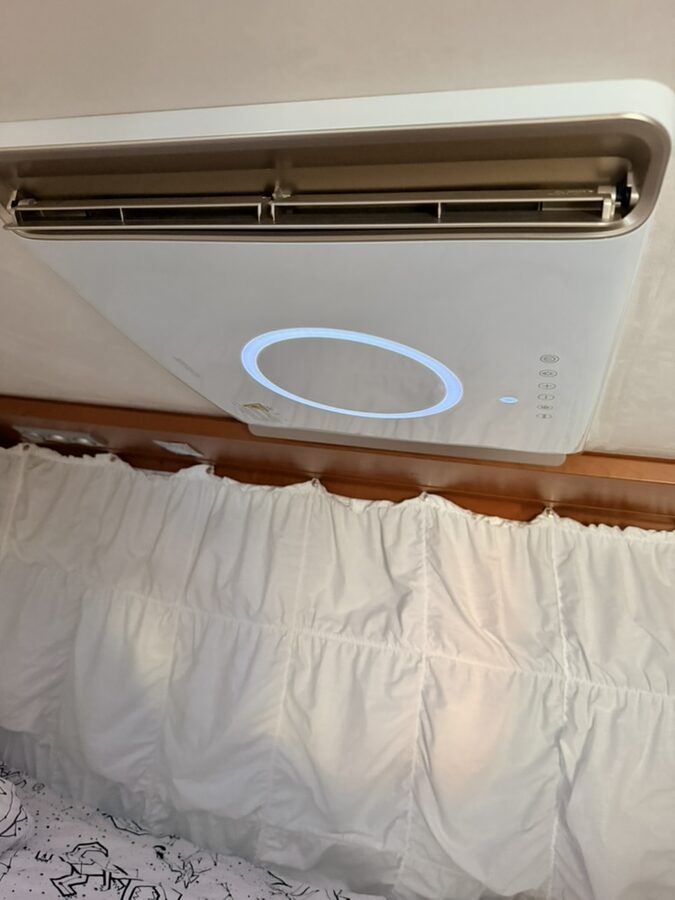
Second air conditioner — SINCLAIR ASV-35BIS

The rear roof air conditioner, a Dometic FreshWell, cools the rear living area well, but it's not enough for an eight-meter-long vehicle — the cool air doesn't reach the front. So I added a second, inverter-driven SINCLAIR ASV-35BIS unit above the front bed. Why I chose an inverter unit, and how the two air conditioners work together as two independent zones, I describe in a separate blog article.
[ PHOTO — lights and horn ] Lighting
Category 04

Lights & Wiring

Converting the front headlights to HELLA Bi-LED

The original headlights no longer matched what I'd expect from a vehicle I drive at night and in everyday traffic. I replaced the front headlights with HELLA Bi-LED Essential and Performance modules — the difference is mainly in the quality of the light beam and the fact that they don't blind oncoming traffic — and added LED turn signals, brake lights, and reverse lights.

The installation, however, was anything but plug & play — the whole story with 3D-printed adapters, a solution using a relay and MOSFET, and night testing is in a separate blog article.

HELLA ValueFit LED Light Bar

Additional LED high-beam light bars on the cab roof. Control is handled via a separate switch and the high-beam lever.

Stebel Nautilus Compact horn

After ten years of use, the original horn was weak and sounded more like a scooter than a six-ton motorhome. I replaced it with a significantly louder electro-pneumatic fanfare horn, the Stebel Nautilus Compact — why this is one of the best modifications from a safety standpoint, I describe in a separate blog article.
Starlink Mini Connectivity
Category 05

Starlink and a 5G router for working on the road

Working on the road needs a stable, fast connection even in places without mobile signal — and that happens regularly in more remote locations.

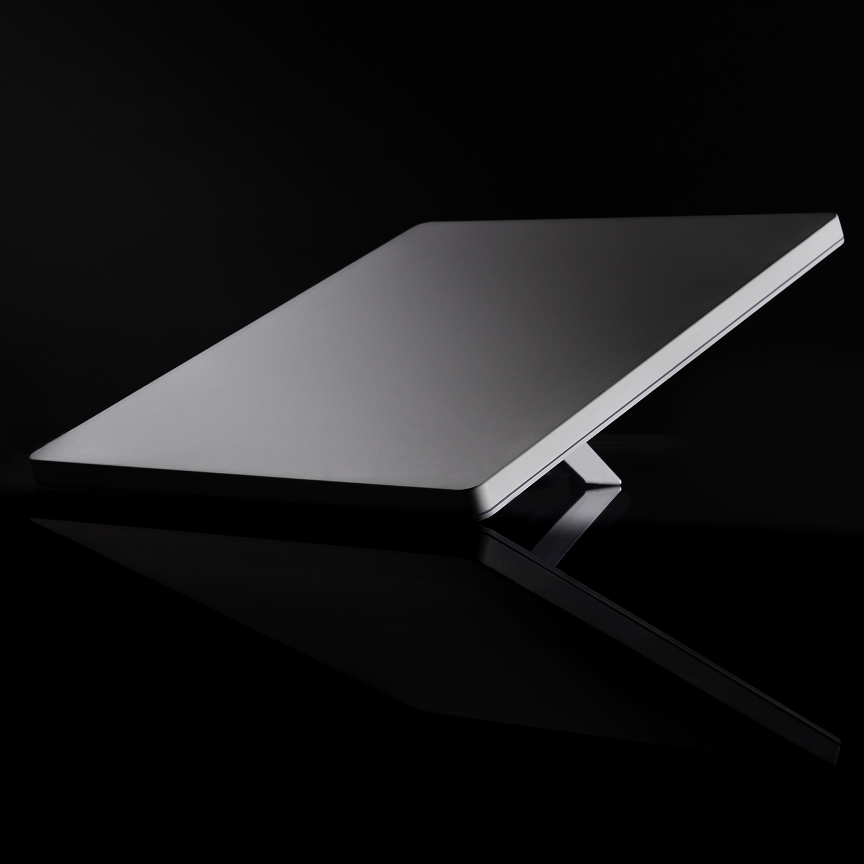
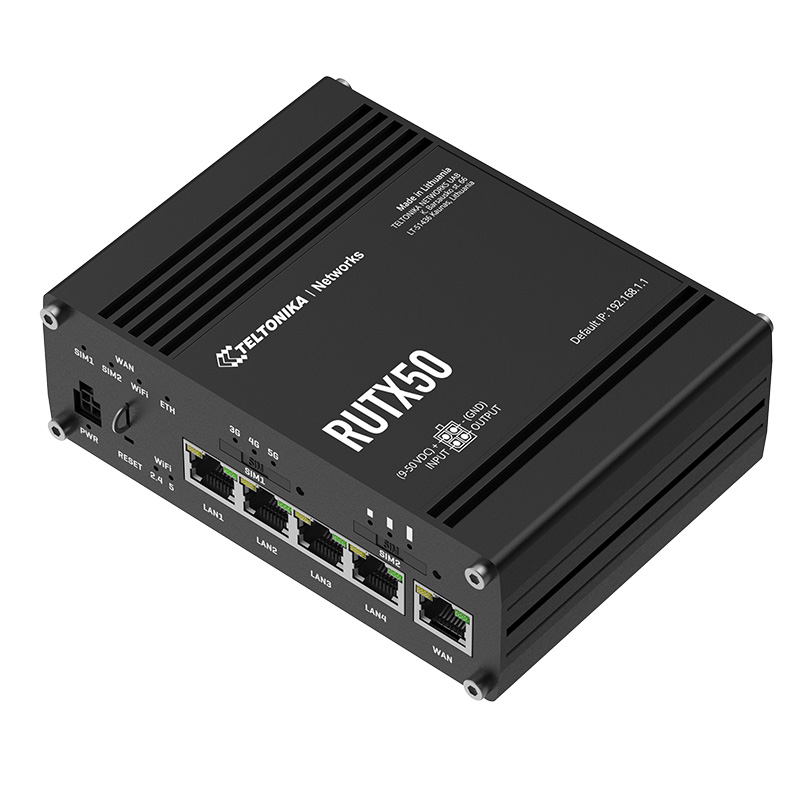
The backbone of the network in the van is a Teltonika RUTX50 instead of an ordinary LTE router — it can handle more connection sources and failover between them — complemented by a Starlink Mini for satellite connectivity where mobile networks don't reach. The relevant tariff for a motorhome is Starlink Roam (unlike the Residential one, which is tied to a fixed address) — currently in the Czech Republic from about 1,250 CZK/month for 50 GB, or about 1,850 CZK/month with no data cap.

I power the Starlink through a 12V adapter with a special cable adapted to the onboard network, so it doesn't need its own separate inverter. According to Starlink, you need a charger with a USB-C PD output of at least 100 W — a weaker one can cause it to cycle. The full wiring setup with automatic failover between Starlink and two SIM cards, plus the story of hunting for the right charger, I describe in a separate blog article.
[ PHOTO — EufyCam S300 on a GoPro mount ] Safety
Category 06

EufyCam S300 for watching over the vehicle

The van often stands overnight in unfamiliar places, and I wanted to keep an eye on what's happening around it without having to run cabling through the bodywork.

The solution is two wireless EufyCam S300 cameras, attached to ordinary GoPro mounts. No drilling holes, no power cables — and easy repositioning depending on where I happen to be parked. After a season of use, this is one of the modifications I'd be least willing to give up.

Chassis and axle Chassis
Category 07

Shock absorbers and anti-corrosion protection

Marquart shock absorbers

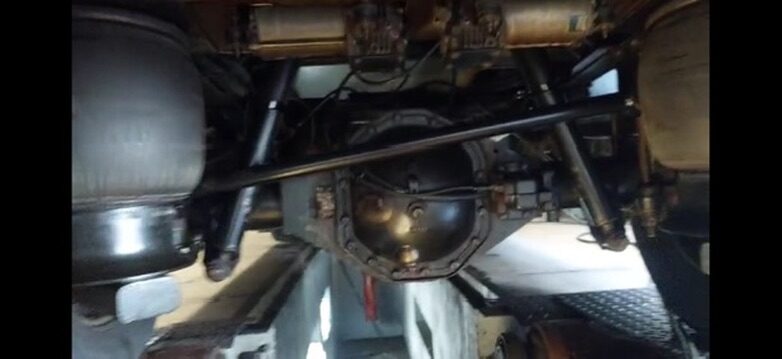
Our Phoenix is built on the robust 6-ton Iveco Daily chassis. The rear axle with twin-mounted wheels ("super singles") runs entirely on air suspension bellows, which provides excellent comfort on the highway and the ability to level the vehicle at the campsite. The factory shock absorbers from Iveco, however, have one fundamental weakness: they're designed for ordinary vans, not for a motorhome that constantly runs at the limit of its maximum technical weight and has a high center of gravity.

⚠️ Problem: swaying, crosswind, and instability in corners

At highway speeds around 100 km/h, the vehicle was extremely sensitive to crosswinds and to the pressure wave when overtaking trucks. When exiting the highway or on roundabouts, the vehicle leaned noticeably. Worst of all, though, were transverse bumps and rutted road surfaces, where the chassis tended to set off secondary rocking of the vehicle (the so-called "yachting effect"). Steering therefore required constant concentration and corrections at the wheel.

🛠️ Solution: reinforced Marquart shock absorbers (Germany)

The only effective solution was a complete replacement of the original shock absorbers with custom, hand-assembled shock absorbers from the German specialist Marquart. These shock absorbers have a significantly larger piston rod diameter, a greater oil volume, and above all, much stiffer damping characteristics in both rebound and compression. They're designed specifically for heavy expedition vehicles and liners. The installation was carried out at an authorized Iveco service center, with replacement on both the front and rear axle.

💡 Real-world experience: a completely different vehicle

The difference is noticeable right from the first few kilometers. The Phoenix stopped behaving like a clumsy box, and the chassis stiffened up incredibly — in a good sense. Body lean in corners dropped by an estimated 50%, the reaction to crosswind has almost disappeared, and the vehicle settles immediately after a bump, with no follow-on rocking whatsoever. Investing in Marquart shock absorbers is an absolute necessity for comfort and safety on long routes.

Dinitrol anti-corrosion protection

The chassis is over 10 years old, and years of winter use and road salt have taken their toll on it. I was therefore looking for a solution that would stop further corrosion — mainly because of the expensive hydraulic chassis legs, which would lose value and functionality if they rusted through. I considered various options for a long time, until I settled on the two-component Dinitrol coating.

Two-stage anti-corrosion protection for the chassis — first, penetrating protection for cavities and joints with Dinitrol ML, then a durable black protective layer with Dinitrol 4941.

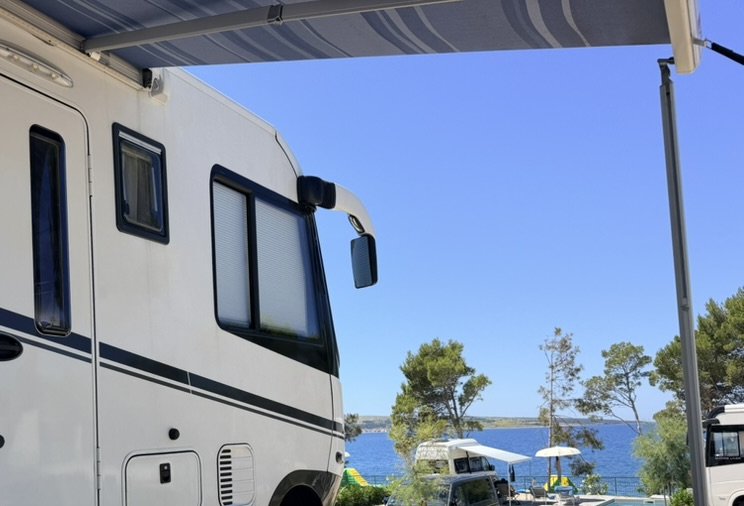
Phoenix on the Iveco chassis — exterior of the vehicle Service
Category 08

Service log

A motorhome is at the same time a truck, a house, a water system, a power plant, a gas installation, heating and air conditioning — and each of these parts needs regular care. Most owners only deal with maintenance once something breaks, even though prevention is always cheaper than repair.

That's why I'm gradually building my own service log — pre-trip and post-trip checklists, service intervals by mileage and years, and rough cost estimates for prevention vs. neglected repairs. The full overview is in a separate blog article.
A detailed service cheat sheet and checklists for the Iveco Daily chassis can be found on a separate page, Iveco Daily service log — readable online or downloadable as a PDF.

Knife block and small kitchen upgrades Interior
Category 09

Interior

The original Phoenix interior was in very good condition even after ten years. My goal therefore wasn't a complete overhaul, but a gradual modernization and increase in comfort for long-term travel. Every modification had to have a practical purpose while preserving the vehicle's original character.

Kitchen

Behind the stove, I had a white tempered safety glass panel made, which protects the wall from grease and at the same time visually brightened up the whole interior considerably.

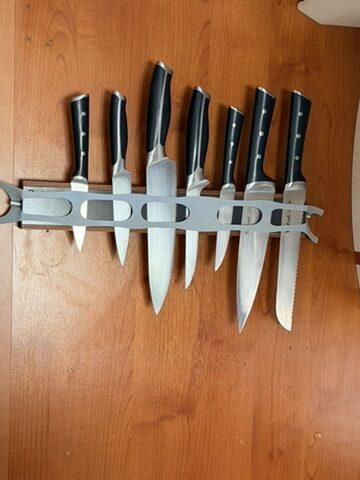
For storing kitchen knives, I chose a professional Wüsthof magnetic strip instead of cheaper magnetic strips. After a long search, it turned out that this particular strip has exceptionally strong magnets and is one of the few that can safely hold quality kitchen knives even with the vibrations of a moving motorhome.

Since safety comes first, I designed a simple solution of my own for this — during driving, a silicone safety strap is stretched across the rack, which mechanically secures the knives. Thanks to this, there's no risk of them coming loose even under hard braking.

Coffee on the road

Good coffee is an essential part of traveling. For the Nespresso coffee machine, I therefore designed my own holder, printed on a 3D printer.

The holder not only firmly secures the coffee machine while driving, but it also includes a capsule storage compartment, so everything is in one place and nothing rattles around in the cupboards.

Small things that make life nicer

The interior also gained designer wine glass holders, which allow glasses to be stored safely while driving.

At first glance it's a small thing, but it's exactly details like this that make a motorhome a place where you genuinely enjoy spending weeks on the road. An LED awning light is another modification I'm gradually working on.

03 — Technology

Technology used in this Phoenix

An overview of the main components that are actually in the vehicle today. This isn't a catalog of parts, but a selection of technologies that have proven themselves in real-world use after testing and modification. The "Used in" badge links to the chapter in the Phoenix Build section, where the decision is described in more detail.

Victron Energy MultiPlus-II 12/3000/120-32 Electrical
Victron Energy MultiPlus-II 12/3000/120-32

Inverter/charger for the vehicle's 230V system. Powers appliances from the batteries, charges from the grid, and integrates with the entire Victron system.

✅ Used in: Electrical 🔗 Victron Energy — specifications
Battery
2× Victron Energy LiFePO₄ Battery NG 12.8 V / 200 Ah

New generation lithium-iron-phosphate batteries from Victron NG. Total capacity of 400 Ah significantly increased the vehicle's self-sufficiency.

✅ Used in: Electrical 🔗 Victron Energy — specifications
BMS
Victron Energy VE.Bus BMS NG

Control and protection system for the Victron NG batteries. Monitors operating limits, communication, and safe disconnection in non-standard conditions.

✅ Used in: Electrical
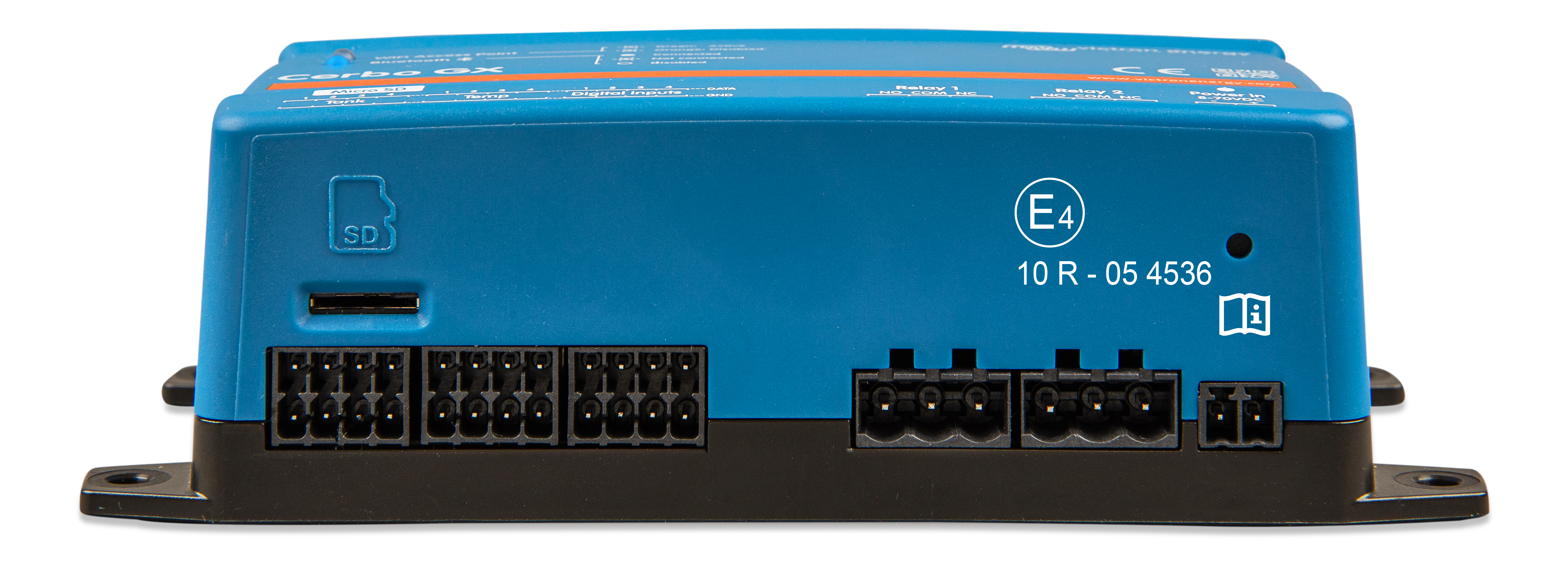
Victron Energy Cerbo GX Monitoring
Victron Energy Cerbo GX

Central display and communication unit for the whole system. Lets you monitor the batteries, inverter, solar, and charging in one interface.

✅ Used in: Electrical 🔗 Victron Energy — specifications
Monitoring
Victron Energy SmartShunt 1000 A

Precise measurement of battery state, current, voltage, and consumption. A fundamental component for a real-world overview of energy in the vehicle.

✅ Used in: Electrical
Solar
Victron Energy BlueSolar MPPT 150/60-Tr

Solar charge controller for the series-parallel panel array. Handles a configuration of 2× 220 Wp + 2× 170 Wp.

✅ Used in: Electrical
DC-DC charging
Victron Energy Orion-Tr Smart 12/12-30A (360 W) Isolated

Isolated DC-DC charger for safe circuit separation and controlled recharging of the traction batteries while driving.

✅ Used in: Electrical 🔗 Victron Energy — specifications
DC-DC charging
Victron Energy Orion-Tr Smart 12/12-50A Non-Isolated

Non-isolated DC-DC charger for additional recharging from the alternator. Together with the 30A unit, it increases energy self-sufficiency while driving.

✅ Used in: Electrical 🔗 Victron Energy — specifications
Charging while driving
Bosch 210 A alternator (0 986 085 510)

A more powerful replacement for the original alternator. Gives the DC-DC chargers enough current to actually recharge the LiFePO₄ bank quickly while driving, not just on paper.

✅ Used in: Electrical 🔗 Bosch Aftermarket — compatibility and technical data
AC charging
Victron Energy Smart IP43 Charger 12 V / 50 A

Backup AC charger for charging from the grid or a generator, mainly during winter use.

✅ Used in: Electrical
Lilie IQflo 12.3 Water
Lilie IQflow 12.3

Four-chamber intelligent pressure pump with smooth output regulation based on water draw. Chosen after comparison with the Carawater SmartPump, mainly for its significantly quieter operation.

✅ Used in: Water 🔗 SvětKaravanů.cz — product
Tested
Carawater Intelligent SmartPump ISP-12-4K-15

Tested four-chamber pump with a flow rate of up to 15 l/min, a Bluetooth app, and three pressure modes of 1.4 / 1.8 / 2.2 bar. Technically interesting, but noisier than the Lilie IQflow.

✅ Used in: Water
Oxygenics Fury RV Shower
Oxygenics Fury RV

Shower head with a more water-efficient stream without the feeling of a weak shower (Venturi effect, 5 modes, 1.8 GPM). A practical modification for longer stays without refilling the water tank.

✅ Used in: Water 🔗 Oxygenics.com — product
Reich Ceramic Trend SR Kitchen
Reich Keramik Trend S

Kitchen faucet with finer water regulation, a ceramic cartridge, and a more modern look. Single-lever faucet with microswitch, chrome-plated finish, connection nozzles for 10–12 mm hoses, weight 0.35 kg.

✅ Used in: Water 🔗 VšeProKaravan.cz — product 🔗 CampingWagner.de — product (DE)
Air conditioning
SINCLAIR ASV-35BIS

Additional inverter-driven roof air conditioner. Thanks to the modified wiring and the Victron system, it can be used efficiently even without a classic shore power connection.

✅ Used in: Heating 🔗 Sinclair Solutions — product
Teltonika RUTX50 5G router Connectivity
Teltonika RUTX50 Industrial 5G Router

Industrial 5G router with two SIM cards, external antennas, and failover capability between the mobile network and other internet sources.

✅ Used in: Connectivity 🔗 Sectron.cz — online store
Connectivity
Starlink Mini

Satellite internet for places without mobile signal. Powered via the vehicle's 12V system without the need for a separate inverter.

✅ Used in: Connectivity
Cameras
EufyCam S300 / eufyCam 3C 4K + HomeBase 3

Wireless security cameras for watching over the area around the vehicle. The side cameras are mounted using custom 3D-printed brackets with a GoPro fitting.

✅ Used in: Safety
Lights
HELLA 90 mm Bi-LED Essential, 1AL 015 318-111

LED replacement for the original dimmed halogen modules. The first step in modernizing the front lighting.

✅ Used in: Lighting
Lights
HELLA 90 mm Bi-LED Performance L45-65, 1AL 015 318-031

Powerful high-beam Bi-LED modules. Installation required custom 3D-printed adapters and a wiring modification using a relay and MOSFET.

✅ Used in: Lighting
Lights
2× HELLA ValueFit LED Light Bar 522 mm with position light

Additional LED high-beam light bars on the cab roof. Control is handled via a separate switch and the high-beam lever.

✅ Used in: Lighting
Horn
Stebel Nautilus Compact

Electro-pneumatic fanfare horn with its own compressor, a harmonized dual tone of 530+680 Hz, ~115 dB/2 m, ECE homologation. Replacement for the weak factory horn.

✅ Used in: Lighting 🔗 Auto-Majáky.cz — product
Chassis
Marquart Premium Shock Absorbers

Reinforced shock absorbers custom-made for a heavy motorhome. One of the modifications with the biggest impact on handling.

✅ Used in: Chassis 🔗 Marquart Stoßdämpfer — manufacturer
Dinitrol 4941 Anti-corrosion
Dinitrol ML + Dinitrol 4941

Two-stage anti-corrosion protection for the chassis. First, penetrating protection for cavities and joints, then a durable black protective layer.

✅ Used in: Chassis 🔗 Dinitrol.sk — product
Wüsthof Magnetic Knife Holder Interior
Wüsthof Magnetic Knife Holder

Strong magnetic knife strip, complemented by a custom silicone safety strap to secure the knives while driving.

✅ Used in: Interior 🔗 Wüsthof.com — product
Segway E300SE Garage
Segway E300SE

Electric scooter stored in the vehicle's garage. Thanks to the solar system and batteries, it can be recharged directly from the energy generated on the roof.

🔗 MTT Brno — online store
Thank You

I'd like to take this opportunity to sincerely thank Jiří Hnízdil, owner of a caravan service in Bzová u Hořovic.

Most of the modifications, upgrades, and technical improvements you'll find on this Phoenix grew out of conversations between my ideas and his years of hands-on experience. Many of the solutions weren't simple or standard — it often took finding new approaches, machining custom brackets, adapting installations, or testing several variants before we landed on the best fix.

It's thanks to his thoroughness, technical knowledge, and willingness to keep searching for a solution that actually works that most of the modifications I rely on with this vehicle on every trip became reality.

If you're looking for a service that isn't afraid of technically demanding motorhome conversions and values quality work over the fastest fix, I can recommend his services based on my own experience.

Caravan Service — Jiří Hnízdil
Bzová u Hořovic, Czech Republic
Web: www.caravan-service.cz
Phone: +420 732 792 878

My vehicle also has a few unconventional modifications. If any of them caught your eye, I'd recommend calling ahead — Jiří Hnízdil can advise whether it would also suit your specific motorhome.

04 — Blog

Short practical articles from the road

All articles →
01

How I Beat the Alternator

Switching to a 210 A Bosch alternator and a pair of Victron Orion-Tr Smart units during the conversion to LiFePO₄.

8 min · June 2026
02

Two Air Conditioners Are Better Than One

How I solved cooling the motorhome along its entire length.

7 min · June 2026
03

How I Solved Internet in a Motorhome

Starlink Mini + Teltonika RUTX50 — a connection that works almost everywhere.

9 min · June 2026
04

Does It Make Sense to Change the Shower Head in a Motorhome?

Oxygenics Fury vs. BodySpa — a comparison of the two best-known RV shower heads.

7 min · June 2026
05

I Replaced the Horn — and It's One of the Best Modifications for Safety

Stebel Nautilus Compact instead of the weak factory horn — why it matters more than you'd expect.

8 min · June 2026
06

When Technology Beats the Limits

A brutal load test of the 12V power plant in the Phoenix on a trip from Croatia — an AC load of 4,446 W.

10 min · June 2026
07

When "Plug & Play" Isn't Plug & Play at All

How we battled for several days to install the HELLA Bi-LED Performance into the Phoenix.

13 min · June 2026
08

Why I Bought a Water Pump Twice

The Carawater SmartPump worked flawlessly. That wasn't enough — it stayed noisy.

6 min · June 2026
05 — Photo Gallery

Before / After & installation details

06 — Downloads

Diagrams, checklists, and service notes

07 — Get in touch

Got a question about a modification or about the Phoenix?

Planning a similar build, dealing with a specific part, or want to know how something holds up after years of use? Write to me and I'll get back to you — I'll include the best questions in the blog too.

↳ I usually reply within 48 h
↳ technical details welcome